
Following a short flight from Raleigh in North Carolina where landing commenced after the safety demo was completed, the fellows arrived in Baltimore and were eager to explore both the clinical and laboratory research divisions at the University of Maryland Medical School.
Their first day at the centre began early, with a 7 AM start at the world-renowned R Adams Cowley Shock Trauma Center – the first facility in the world to treat shock. Not only is the centre a leader in trauma care, but it also leads in patient enrolment for the Major Extremity Trauma and Rehabilitation Consortium (METRC), which focusses on high-quality clinical studies in orthopaedic fracture surgery research. Two of the fellows had the fantastic opportunity to present their research to an engaged audience of orthopaedic residents, attendings, and academic faculty, sparking insightful discussions and receiving valuable feedback from Dr Robert O’Toole (Professor of Orthopaedic Trauma), Dr Gerard Slobogean (Associate Professor and Director of Clinical Research for the Department of Orthopaedics), and Associate Professor Nathan O’Hara (Co-Director of Center for Orthopaedics, Injury, and Research Innovation) – the three leading Orthopaedic Trauma Clinical Research Faculty at the hospital.
The group were then treated to breakfast before embarking on a tour of the hospital led by Dr Gerard Slobogean. The fellows learned about the unique aspects of the hospital, including its absence of a conventional emergency department. Unlike typical hospitals, it does not accept general walk-in patients, as it primarily aims to treat those sustaining the most complex traumatic injuries. Patients are transported by ambulance or helicopter, with one of 10 helicopters strategically stationed across seven regions of Maryland – each helicopter covers an average area of just 35 square miles to ensure rapid response times. The hospital also boasts 13 dedicated Trauma Resuscitation Units, positioned adjacent to 10 trauma operating rooms. It’s safe to say they are well prepared for managing trauma patients!
Following the hospital tour, the fellows were warmly welcomed by Professor Masahiro Iwamoto from the Division of Musculoskeletal Sciences. Professor Iwamoto’s lab specialises in a variety of research techniques such as genetically modified mouse models, animal surgery (including primates), and cell culture, among others. The fellows were given an in-depth tour of the state-of-the-art laboratory, which featured a range of advanced research equipment. The fellows then listened to fascinating presentations from Professor Iwamoto on his research about chondrocyte differentiation during endochondral ossification and strategies to prevent both acquired and congenital pathological bone formation, such as heterotopic ossification. Afterwards, the fellows attended a departmental seminar where Associate Professor Ling Qin from the University of Pennsylvania presented her work on skeletal progenitors in orthopaedic tissues and diseases. During lunch, the fellows had the opportunity to engage in discussion with Associate Professor Ling Qin and other faculty members from the department where they were able to discuss their own research projects.
Later that evening, Dr Slobogean and Associate Professor Nathan O’Hara kindly hosted the fellows for dinner at a scenic waterfront restaurant. The group then headed to a lively sports bar to watch the Four Nations Ice Hockey game between the US and Canada, which ended in an unforgettable way, specifically for their hosts! To top it off, a game of chance helped bring the bill down lower than anticipated!
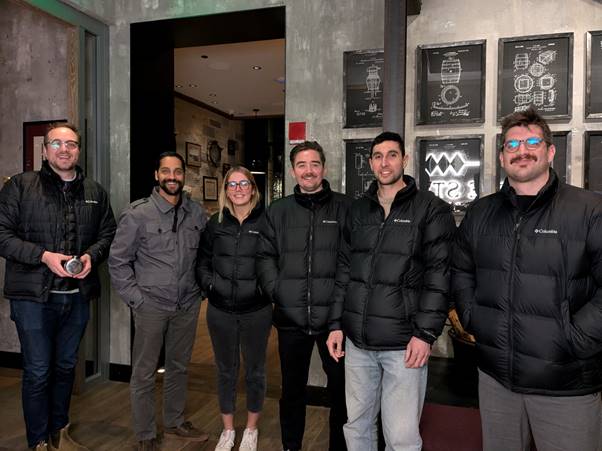
The second day kicked off with the fellows attending the trauma meeting at Shock Trauma, which was followed by breakfast. Afterward, they had the opportunity to meet Professors Joseph Stains and Christopher Ward from the Division of Musculoskeletal Sciences, whose research focusses on cell-to-cell communication in bone cells and how intercellular communication coordinates new bone remodelling and repair. The fellows had the great opportunity to present their own work to the research team, who were so engaged and interested that the fellows lost track of time, running a bit later for their next meeting with Dr O’Toole, Dr Slobogean, and Associate Professor O’Hara. This meeting sparked an in-depth conversation about the challenges of conducting and implementing clinical trial findings, as well as a comparison of how orthopaedic trauma clinical trials are conducted in the UK versus the US.
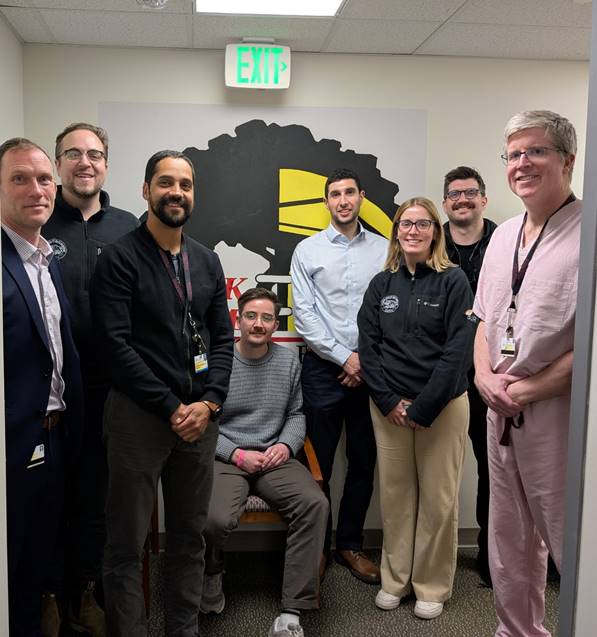
By the end of their visit, the fellows left Baltimore feeling inspired and enriched by insightful discussions, new collaborations, and a deeper appreciation for the remarkable clinical and research work being done at the University of Maryland.
 British Orthopaedic Research Society